


The Great Geopolitical Standoff: A Deep Dive into US-Venezuela Relations
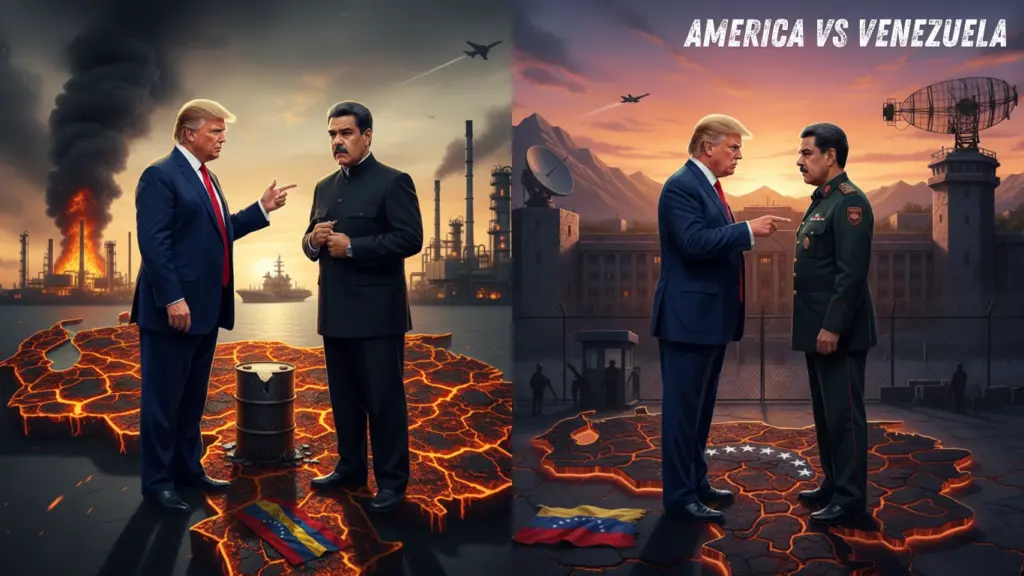
Washington, D.C.– The relationship between the United States and Venezuela is one of the most complex and high-stakes sagas in modern history. Beyond the headlines, it is a story of ideological battles, economic warfare, and a global struggle over the world’s largest oil reserves.
As we navigate through 2026, understanding the nuances of this conflict is essential for anyone following international politics and global energy markets.
1. Historical Context: From Partners to Rivals
For decades, Venezuela was a key strategic partner for the US in South America. However, the tide began to turn in the late 1990s with the rise of the Bolivarian Revolution.
The shift from a pro-Western stance to a “Socialism of the 21st Century” model created a massive rift. Nationalization of foreign assets, particularly in the oil sector, led to legal battles that still haunt the international courts today.

2. The Oil Factor: A Double-Edged Sword
Venezuela sits on top of more than 300 billion barrels of proven oil reserves. Ironically, this wealth has become a focal point of the conflict:
- PDVSA and Sanctions: The US Department of the Treasury has utilized heavy sanctions against PDVSA (Petróleos de Venezuela, S.A.). These sanctions were designed to cut off the primary revenue stream of the Venezuelan government.
- The Case of Citgo: One of the biggest points of contention is Citgo Petroleum, a US-based refiner owned by PDVSA. Currently, Citgo is at the center of a complex legal “tug-of-war” involving creditors and political factions.
- Infrastructure Decay: Due to lack of investment and inability to access US-made spare parts, many Venezuelan refineries are operating at a fraction of their capacity.
3. Diplomatic Cold War: Recognition and Legitimacy
The political landscape took a dramatic turn in 2019 when the US and over 50 other countries declared the 2018 elections illegitimate.
- Parallel Governments: For years, the world saw a unique situation where some nations recognized an “interim government” while the de facto power remained with Nicolás Maduro in Caracas.
- Indictments, Not Invasions: While the US Justice Department has issued indictments against high-ranking Venezuelan officials for various charges, it is important to clarify that no military capture or invasion has taken place. The battle remains strictly in the realms of law, diplomacy, and economics.
4. The Human Cost and Migration
The economic standoff has had a profound impact on the Venezuelan people. Hyperinflation and lack of basic goods led to one of the largest displacement crises in the Western Hemisphere.
Millions of Venezuelans have migrated to neighboring countries and the US, making the “Venezuela problem” a domestic political issue for many leaders in the Americas.
5. Global Players: Russia, China, and Iran
Venezuela is not just a regional issue; it’s a global one. To counter US pressure, the Maduro administration has strengthened ties with other world powers:
- Russia: Provides military cooperation and financial advice.
- China: Acts as a major creditor and a buyer of Venezuelan crude.
- Iran: Has assisted in repairing refineries and providing fuel during shortages.
This “Axis of Cooperation” has made the US sanctions strategy more difficult to execute, as Venezuela found alternative ways to survive the economic blockade.
6. The 2024-2026 Outlook: Diplomacy or Deadlock?
Recent years have seen a slight shift in strategy. The Barbados Agreement and subsequent talks in Qatar and other regions showed that both sides are looking for a way out.
The US has occasionally granted “licenses” (like the one for Chevron) to allow limited oil exports, signaling that energy security might sometimes take priority over political regime change.
Conclusion: A Path Toward Stability?
The US-Venezuela conflict is a reminder that in geopolitics, there are no easy answers. The combination of oil, power, and human rights creates a deadlock that may take decades to fully resolve. For the global market, a stable Venezuela means a more stable oil price; for the region, it means the end of a humanitarian crisis.
🔗 Related Posts
✨ You May Like These Articles


